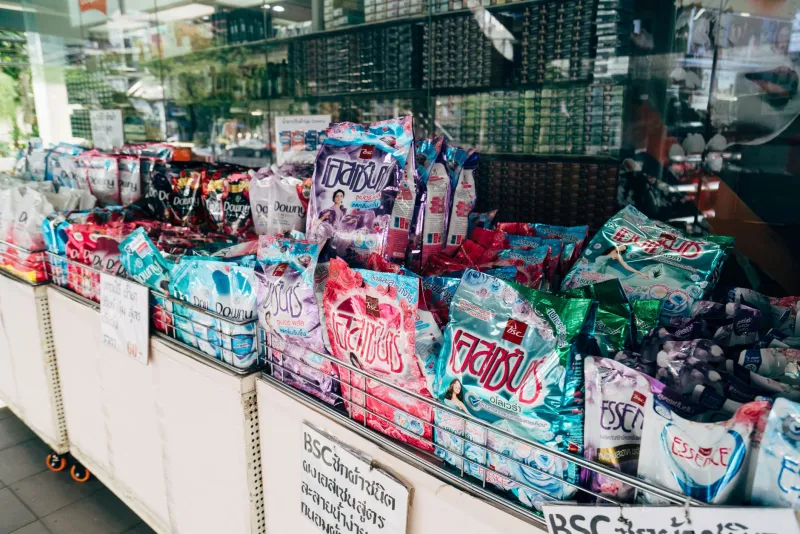
Too Much of Everything: How Bloated Marketplaces Are Breaking the Shopping Experience

There's a particular kind of frustration that's become almost universal among online shoppers. You open a marketplace, type in exactly what you're looking for, and get back 47 pages of loosely related results — half of them sponsored, a quarter of them from brands you've never heard of, and a handful that are genuinely what you wanted, buried somewhere around page three. You came in with a mission. You leave with a headache.
This isn't a glitch. It's the logical endpoint of a retail philosophy that's been building for years: the idea that selling more categories automatically means serving shoppers better. Spoiler — it doesn't.
When Carrying Everything Means Finding Nothing
The appeal of the mega-marketplace model is obvious. One account, one cart, one checkout. You don't have to bounce between sites, remember multiple passwords, or re-enter your shipping address for the fifth time this week. That convenience is real, and it's genuinely valuable.
But there's a hidden cost that platforms don't advertise on their homepage banners: when you're selling groceries alongside electronics alongside patio furniture alongside fast fashion, you're not creating a better shopping destination — you're creating a search problem at industrial scale.
Every category a marketplace adds brings with it thousands of new sellers, competing product listings, and algorithmic complexity. The search engine that works reasonably well for USB cables doesn't necessarily translate to helping you find the right mattress topper. The recommendation engine trained on what you bought last Tuesday in kitchen supplies is now trying to guess what you want in outdoor gear. The signals get noisy. Fast.
Algorithmic Overload Is a Real Thing
Here's what's happening behind the scenes when you search a sprawling marketplace: the algorithm is simultaneously trying to serve your intent, surface paid placements, promote the platform's own house brands, reward high-volume sellers, and keep you engaged long enough to add more to your cart. Those are not all the same goal.
Researchers who study e-commerce UX have a name for what this creates: discovery friction. It's the gap between what a shopper is trying to find and what the platform actually surfaces. And in oversaturated marketplaces, that gap has grown considerably.
The irony is sharp. A specialty retailer with a fraction of the inventory can often deliver a cleaner, faster path to the right product — because every item in its catalog is contextually relevant. A mega-marketplace selling 400 million SKUs across 30 categories is, by definition, showing you things that don't matter to you the vast majority of the time.
Category Cannibalization Nobody Talks About
There's another dynamic at play that gets far less attention: categories eating each other. When a platform expands aggressively — say, adding a full grocery section to a site originally built for electronics — the resources, algorithmic weight, and merchandising attention don't expand equally. Something gets deprioritized.
Sellers in mature categories often notice this first. Suddenly their visibility drops. Their products are harder to find. Not because they did anything wrong, but because the platform shifted its energy toward onboarding a new vertical. Shoppers feel the downstream effect as degraded results in categories they used to rely on.
This is category cannibalization — and it's one of the quieter ways that marketplace sprawl actively harms the shopping experience even for loyal users.
The Seller Conflict Nobody's Solving
Mega-marketplaces are also juggling a fundamental tension: they're simultaneously a retail platform and a venue for third-party sellers who are often competing directly with each other — and sometimes with the platform itself.
When a marketplace carries 14 different versions of the same blender from 14 different sellers, that's not better selection. That's a comparison nightmare. Shoppers end up spending more time evaluating nearly identical listings, parsing subtle differences in price, shipping speed, and seller reputation, than they would have if they'd just gone to a store with a curated selection of three well-vetted options.
The friction compounds when you factor in counterfeit risk, inconsistent product descriptions, and review manipulation — all problems that scale proportionally with how many third-party sellers a platform allows in.
Bigger Isn't Always Better for the Shopper
None of this means large marketplaces are without value. For commodity purchases — things you buy often, know exactly what you want, and just need delivered fast — a sprawling platform with efficient logistics is genuinely hard to beat. That's a real use case, and it's a good one.
But the promise that one platform can be the best place to buy everything, across every category, for every type of shopper? That's marketing, not reality. And a growing number of American consumers are starting to notice the gap between the pitch and the actual experience.
The 'any' problem — trying to be everything to everyone — isn't just a business challenge. It's a shopper experience failure that shows up every time you scroll past 12 irrelevant sponsored results looking for the thing you actually need. At AnyOfStore, we think about this a lot: having access to a broad range of products matters, but so does making sure you can actually find what you came for.
The future of smart shopping probably isn't one platform that does it all perfectly. It's platforms that do their part of it well — and shoppers who know the difference.