Store Brand Takeover: What It Really Means When Your Favorite Marketplace Starts Competing With Itself
You've probably noticed them — those products with names that sound vaguely familiar but don't quite match any brand you recognize. Clean packaging, solid ratings, competitive prices. They show up near the top of your search results, often with a "Recommended" or "Best Value" tag attached. And increasingly, they're made by the same platform you're shopping on.
Private label retail isn't new. Grocery stores have been doing it for decades. But what major online marketplaces are doing with house brands is something different in scale, sophistication, and potential impact on the shoppers who trust them.
The Scope of What's Actually Happening
Over the past several years, the largest US online marketplaces have quietly built out enormous private label portfolios spanning dozens of categories — apparel, household goods, electronics accessories, food, personal care, baby products, and more. Some of these brands are clearly identified as platform-owned. Many are not.
This matters because the platform occupies two roles simultaneously: it's the marketplace where independent brands compete for attention, and it's now also a competing seller using that same marketplace. That's not inherently illegal or even unusual in retail. But it creates structural incentives that are worth understanding before you assume the playing field is level.
How the Algorithm Advantage Works
Here's where things get genuinely complicated. When a platform controls both the search algorithm and a competing product line, there's an obvious temptation — and a clear financial incentive — to favor the house brand in search results.
Researchers and journalists have documented instances where platform-owned products appeared disproportionately in top search positions despite not having the highest ratings or the most reviews. In some cases, independent sellers have reported that their products were buried in search results shortly after the platform launched a competing private label item in the same category.
The platforms deny systematic favoritism, and proving algorithmic bias is genuinely difficult from the outside. But the incentive structure is real, and the effect on smaller independent sellers can be significant — which ultimately affects the diversity of products available to shoppers.
The Packaging Problem
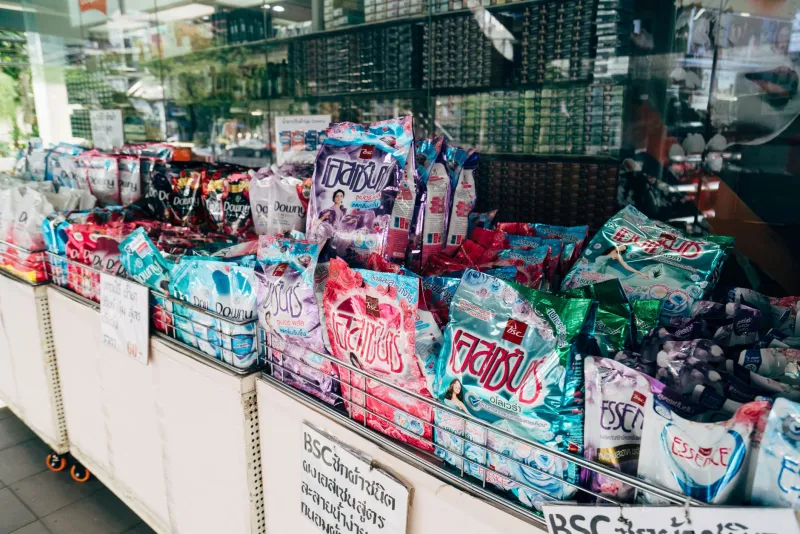
One of the more subtle tactics worth knowing about: private label products that are designed to look similar to established name brands. Not identical — that would be trademark infringement — but close enough that a quick-scrolling shopper might not immediately register the difference.
Similar color schemes, comparable typography, product names that evoke the market leader. It's a strategy borrowed from physical retail, where store-brand products have long been positioned adjacent to the name brands they're designed to replace. Online, where product images are small and decisions are fast, the tactic is arguably more effective.
This doesn't mean private label products are automatically inferior — sometimes they're genuinely good value. But the mimicry strategy is designed to transfer brand trust rather than earn it independently, which is a different thing.
Quality Consistency: The Real Wildcard
Here's the honest reality about marketplace private labels: quality is all over the map.
Some house brand products are legitimately solid — manufactured in the same facilities as name brands, meeting comparable standards, and priced more competitively because there's no third-party brand premium built in. Others are produced to a price point that makes the low cost make more sense in hindsight.
The challenge is that the platform's own branding creates a consistency halo that may not be earned. When you buy a name brand product, you have some sense of what that brand stands for and what its quality track record looks like. When you buy a private label product under a platform's house brand umbrella, you're trusting the platform's curation — and the platform has a financial interest in selling you that product, which is not the same as an interest in making sure it's the best option for you.
What Savvy Shoppers Are Doing About It
None of this means you should avoid private label products entirely. It means you should evaluate them the same way you'd evaluate any product — on the actual merits, not on the implied endorsement of where they're being sold.
A few habits that help:
Read reviews skeptically. Private label products on major platforms sometimes accumulate reviews faster than their sales history would organically support. Look at the review spread, the dates, and the specificity of the feedback.
Search by category, not just by platform default. Instead of accepting the top results at face value, filter by customer rating, scroll past the sponsored and featured placements, and compare the private label option against independent brands on equal footing.
Check whether the platform identifies its own brands. Some are transparent about which brands they own. Others make it harder to tell. Knowing who you're actually buying from is useful information.
Don't assume algorithm placement equals quality. A product appearing at the top of your search results tells you something about how it's being merchandised. It doesn't tell you much about whether it's actually the best choice for your needs.
The Bigger Picture for Shoppers
The growth of marketplace private labels raises a legitimate question about what it means to shop on a platform that's also your competition. The convenience of one-stop shopping is real. But so is the fact that the platform's interests and your interests aren't always perfectly aligned — especially when the platform profits from steering you toward its own products.
At AnyOfStore, we think transparency matters. Knowing what you're buying, who made it, and why it's appearing where it is in your feed isn't a luxury — it's basic information you deserve as a shopper. The best shopping experience is one where you're making choices based on what's actually right for you, not what's most profitable for the platform serving up your results.