That 'Lowest Price Guaranteed' Badge Is Doing a Lot of Heavy Lifting — And Not Always for You
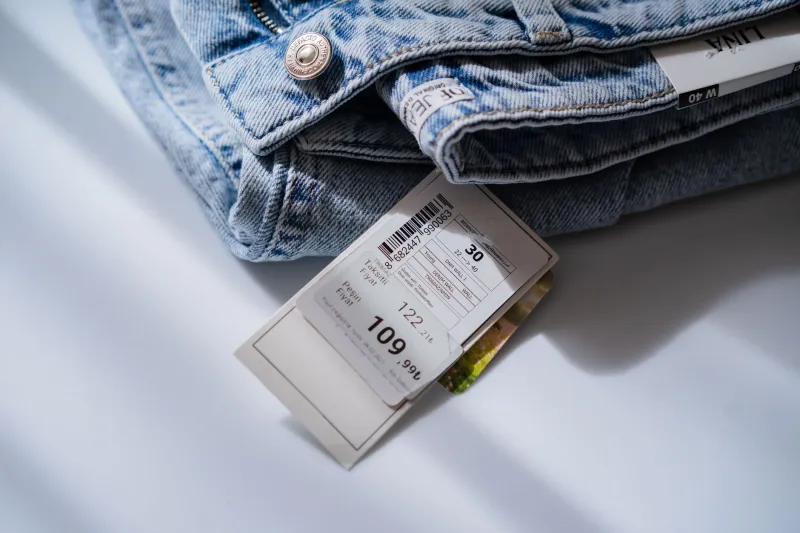
There's something undeniably satisfying about seeing a "Lowest Price Guaranteed" badge on a product listing. It feels like the retailer is going to bat for you — like they've done the homework so you don't have to. You add it to your cart, check out, and move on with your day feeling like a savvy shopper.
Except, more often than not, that badge is doing a whole lot of marketing work while doing very little actual price-protecting. The gap between what "price match" sounds like and what it actually delivers is wider than most people realize — and understanding that gap could save you real money.
What a Price-Match Guarantee Actually Promises
On the surface, price-match policies seem straightforward: if you find the same product cheaper somewhere else, the retailer will match that price. Some even promise to beat it by a percentage. It sounds like a safety net.
But read the fine print on almost any major e-commerce platform's price-match policy, and you'll start to notice the asterisks multiplying. Most policies come loaded with exclusions:
- The competing retailer has to be on an approved list
- The item must be "identical" — same model number, color, size, and often seller
- The competitor's price can't be a sale, clearance, flash deal, or limited-time promotion
- The item must be in stock at the competitor at the time of your request
- Third-party marketplace listings typically don't count
- Price-match requests often have to be made within a specific window after purchase
Put all of that together and you've got a guarantee that technically exists but practically applies to a pretty narrow slice of real-world shopping scenarios.
The Algorithm in the Room
Here's where it gets more interesting. Major online marketplaces don't just set prices and leave them. They use dynamic pricing algorithms that adjust product prices constantly — sometimes hundreds of times per day — based on competitor pricing, inventory levels, demand signals, time of day, and even individual user behavior.
What that means in practice: the "price" of a product on a platform isn't a fixed number. It's a moving target. So when a retailer promises to match the "lowest price," they're often already monitoring competitor prices in real time and adjusting their own listings accordingly. The price-match guarantee becomes less of a consumer protection tool and more of a marketing story layered on top of a system that's already doing its own version of price optimization.
The uncomfortable truth? In many cases, the platform has already decided what price it's comfortable selling at — and the "guarantee" is there to make you feel confident enough to stop comparing and just buy.
Supplier Agreements Change the Math
Another piece of the puzzle that rarely gets talked about: Minimum Advertised Price (MAP) agreements. These are contracts between brands and retailers that set a floor on how low a product can be publicly listed. The brand protects its perceived value; the retailer avoids a race to the bottom.
MAP agreements are extremely common in consumer electronics, appliances, and name-brand goods. What they mean for you as a shopper is that when you're comparing prices across major retailers for, say, a popular blender or a specific pair of headphones, you're often looking at prices that are all anchored to the same MAP floor. Every store looks competitive. None of them can actually undercut the others by much — because the brand won't let them.
So when a retailer offers to "price match" within that product category, they're essentially promising to match a price that's already been set by the brand itself. It's a guarantee with a built-in ceiling.
The Loopholes Consumers Miss Most
Beyond MAP agreements and algorithmic pricing, there are a few specific loopholes worth knowing about:
The "identical item" trap. Manufacturers frequently create retailer-exclusive product variations — slightly different model numbers, bundle configurations, or color options — specifically to prevent apples-to-apples price comparisons. You might find what looks like the same TV for $50 less at a competitor, only to be told it's a "different model" and therefore ineligible for a match.
The third-party seller exclusion. On marketplace platforms, a huge percentage of listings come from third-party sellers rather than the platform itself. Most price-match policies only apply to items sold directly by the retailer — meaning the competitive prices you're most likely to find from independent sellers are often off the table.
The timing game. Prices fluctuate constantly. A competitor might have a lower price at 9 a.m. that's gone by noon. Price-match requests require documentation of the lower price at the time of the request, and that window closes fast.
How to Actually Verify You're Getting a Good Deal
None of this means you should throw your hands up and assume you're always overpaying. It just means the verification work falls on you — not the badge. Here's a practical approach:
Use price tracking tools. Browser extensions and third-party sites can show you the price history of a product over time. If something has been $49.99 for six months and is now listed as "on sale" for $47, that's a very different deal than something that dropped from $79.
Check multiple retailer types. Don't just compare prices between the big marketplace platforms. Check specialty retailers, brand websites, and warehouse clubs. They often operate outside the MAP ecosystem in ways that create genuine savings opportunities.
Read the policy before you need it. If you're making a significant purchase, take five minutes to actually read the price-match policy before you buy. Know the exclusions, the timeline for requests, and which competitors qualify. That way you're not discovering the fine print after the fact.
Factor in the total cost. Price matching focuses on the sticker price, but your actual cost includes shipping, taxes, return policies, and warranty terms. A slightly higher upfront price at a retailer with free returns and a strong warranty might be the better deal overall.
The Bigger Picture
Price-match guarantees aren't inherently dishonest. Sometimes they do exactly what they say. But the framing around them — the badge, the bold promise, the implied simplicity — often creates more confidence than the policy itself deserves.
Smart shopping in a marketplace environment means treating those guarantees as a starting point, not a finish line. The platforms are sophisticated. The pricing systems are complex. And the fine print is doing a lot of work that the marketing language glosses over.
You don't need to become a pricing expert to shop well. But a little healthy skepticism about what "guaranteed" actually means? That's probably worth more than any badge.